As we head into 2026, new sustainability reporting standards are reshaping what it means to be a successful landlord or investor in Australia.
Whether you own a warehouse, a shopping centre or an office building, now is the time to rethink your approach to commercial, industrial and retail assets, not just to stay compliant but to stay competitive.
What’s Changing in 2026?
In response to global climate challenges and investor pressure, Australia is introducing mandatory climate-related financial disclosure from 2026 under the AASB S2 and IFRS S1/S2 frameworks. What does this mean for property owners?
If your property falls under a qualifying entity (or is leased to one), you’ll need to report on:
- Scope 1 emissions – direct emissions from owned or controlled sources
- Scope 2 emissions – indirect emissions from the generation of purchased electricity
- Scope 3 emissions – all other indirect emissions (like tenant energy use, waste, transport etc.)
Even if you’re not directly required to report, your tenants or buyers might be and that shifts the responsibility back to you. Tenants will prioritise energy-efficient buildings that align with their reporting obligations. investors will scrutinise ESG risks. And banks may reassess asset risk profiles.
Does This Apply To You?
BDO have a great flowchart to assist in understanding if this applies to you and where you sit on the reporting scale.
BDO Australia, is one of Australia’s leading advisory firms in sustainability and corporate reporting. Their flowchart provides a clear and practical way for business to understand how Australia’s upcoming sustainability reporting requirements may apply, based on factors such as organisational structure, size and reporting thresholds. It’s a useful visual guide for navigating what can otherwise be a complex area and it helps set the context for why early preparation is becoming increasingly important for property owners and businesses alike.
Why it Matters for Your Property / Asset
Property is no longer just about bricks and mortar, it’s about carbon, compliance and competitiveness.
If your assets aren’t prepared for ESG scrutiny or energy transparency, you risk:
- Losing high-value tenants to greener competitors
- Increased insurance premiums due to unassessed climate risk
- Reduced asset value from perceived sustainability risk
- Higher operating costs from inefficient systems or outdated infrastructure
On the flip side, aligning your property with the new reporting standards can unlock enormous upside.
What Smart Property Owners Are Doing Now
Forward-thinking Landlords and investors are already working with their property managers to:
1.) Conduct Sustainability Health Checks
Assess how their properties perform under new emissions and governance standards. Are your tenants using energy-efficient systems? Do your leases support ESG initiatives?
2.) Implement Decarbonisation Plans
Whether it’s installing a rooftop solar, improving HVAC efficiency or integrating sub-metering for tenants, these upgrades reduce costs and make your property more appealing.
3.) Update Lease Structures
“Green Leases” are becoming the norm. These agreements ensure that both landlord and tenant work toward shared sustainability goals, reducing friction and futureproofing the tenancy.
4.) Streamline Reporting and Governance
A good property manager will help you collect and report the right data – from energy use to emissions to climate risk exposure – keeping you ahead of regulatory and investor requirements.
How We Help at Ray White Commercial CSR
We specialise in commercial, industrial and retail property and asset management with a sharp focus on helping clients navigate the evolving compliance and sustainability landscape.
We combine deep market knowledge with strategic insights to:
- Maximise rental returns whilst reducing operating costs
- Attract ESC-conscious tenants with compliant, efficient properties
- Prepare your asset for valuation, financing and insurance with up-to-date climate risk and emissions data
- Identify growth opportunities in your portfolio
Whether you have one site or a national investment portfolio, we tailor our approach to your goals, asset class and reporting obligations.
2026 is not just a deadline – it’s a turning point
The property owners who thrive will be the ones who evolve. That means going beyond rent collection and maintenance and embracing strategic, sustainability-aligned management.
If you want to protect your investment, attract top-tier tenants and unlock long-term value, you need a partner who understands what’s coming and how to act on it.
At Ray White Commercial CSR, we’re here to help you navigate the future of commercial, industrial and retail property management with clarity, confidence and compliance.
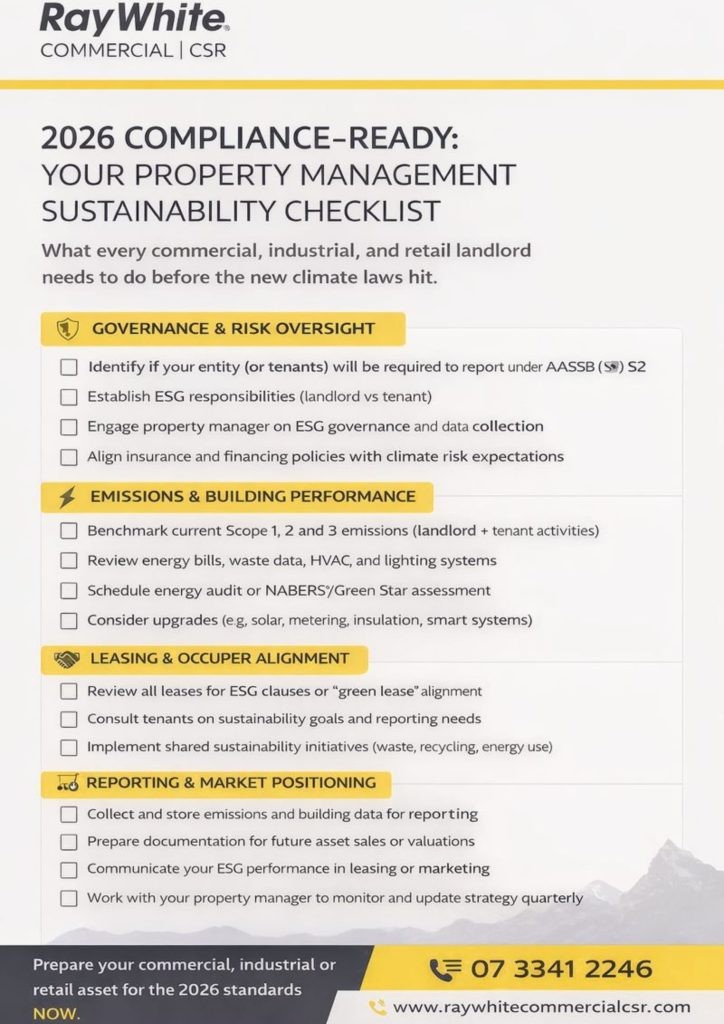
You can download our checklist here for your convenience – 2026 New Sustainability Laws for Commercial, Retail and Industrial Property