
Underwood Commercial Property Overview for Sales, Leasing and Property Management
Underwood sits in a practical, business-friendly corridor – close enough for major employment nodes to attract operators and connected enough to support industrial trade, service and retail uses. When you’re assessing performance in a suburb like Underwood, you’re looking for signals that tenants can operate efficiently: access, convenience, staff commute and proximity to the broader Brisbane – Logan catchment. These are the fundamentals that keep leasing enquiry alive, even when conditions tighten. Strong management turns those fundamentals into outcomes which include stable tenancies, disciplined renewals and a credible story when it’s time to refinance or sell.
Where Underwood (QLD 4119) Sits in the SEQ Commercial Map
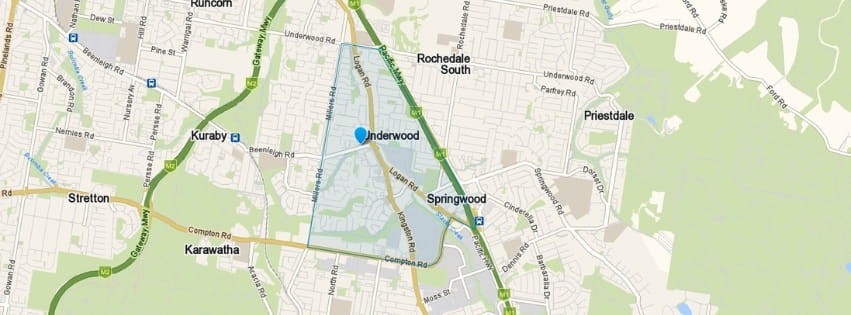
Underwood is a suburb in South East Queensland within the City of Logan (Postcode 4119). Its position along a major SEQ movement corridor, with access to the Pacific Motorway (M1) in a region with an estimated GRP of $18.24 billion in 2023/24 and more than 130,000 local jobs.
For commercial investors, that positioning does a lot of heavy lifting.
Key facts:
- Approx. 17-19 km by road from Brisbane CBD (depending on route)
- Direct access to the Pacific Motorway (M1) with links to the Gateway Motorway and Logan Motorway
- Ongoing M1 upgrades between Eight Mile Plains, Underwood and Daisy Hill improving capacity and travel times (including lane widening and new on-ramps around the Underwood/Springwood section)
From an investor perspective, the key takeaway is that Underwood’s fundamentals are built around access and practicality – two things that tend to support steadier tenant demand when markets tighten.
Snapshot of Underwood: Who’s here and what does that mean for tenants and you
This is not a “sleepy” suburb. It’s an active, working area with a demographic profile that supports everyday services and business activity.
For investors, that matters because location doesn’t just influence rent, it influences tenant demand, leasability and how quickly your property recovers from vacancy or market shifts. When you’re assessing performance in a suburb like Underwood, you’re looking for signals that tenants can operate efficiently.
According to recent Census data and updated local estimates:
- Population: approx. 7,400
- Area: approx. 4.2 square km with 11 parks (around 10% of land area)
- Primary age range: 20-39
- Household mix: 56% family / 44% single
- Owner/rent split: approx. 69% / 31%
- Average household size: 3.1 people
- Average motor vehicles per dwelling: 2.1 – high car usage, good for drive-to trade and bulky goods.
Why should a commercial investor care? Because demographics influence the local economy: workforce availability, spending patterns, service demand and the resilience of local operators. A younger, working-age skew often supports food, convenience retail, allied health, trade services and a last-mile style businesses – especially when the suburb is well connected.
A suburb with a strong working-age profile and a mix of family and single households typically supports repeat demand for:
- Convenience and service retail (food, health and personal services)
- Allied health and community-facing operators
- Trade and service businesses that need local catchment plus broader corridor reach
For owners, demographics matter because they influence workforce availability, spending patterns, service demand and the resilience of local operators. A strong working-age profile plus car-reliant households is exactly the mix that underpins everyday-needs and trade-style users.
The Bigger Picture: Logan’s Growth and Industrial Tailwinds
Zooming out from the suburb, the macro story in Logan is straightforward: growth plus infrastructure.
- Logan’s GRP reached $18.24b at June 2024, up 2.6% year-on-year
- Council and State planning see Logan as “one of the fastest growing areas in South East Queensland” over the next 15 years
- The city hosts more than 20,000 businesses, with strong representation from manufacturing, retail, construction, logistics and community services
- Across SEQ, premium industrial rents have reportedly risen about 50% since 2021, reflecting a critical shortage of well-located industrial land
- Recent land valuation data shows industrial land values in Logan suburbs have surged, driven by demand near M1-adjacent transport hubs
For Underwood assets, these trends create a tailwind for income and long-term land value, but they also raise the bar on documentation, compliance and cost control, especially as land tax and rates follow valuations.
The Commercial Landscape in Underwood: Retail, industrial and service mix
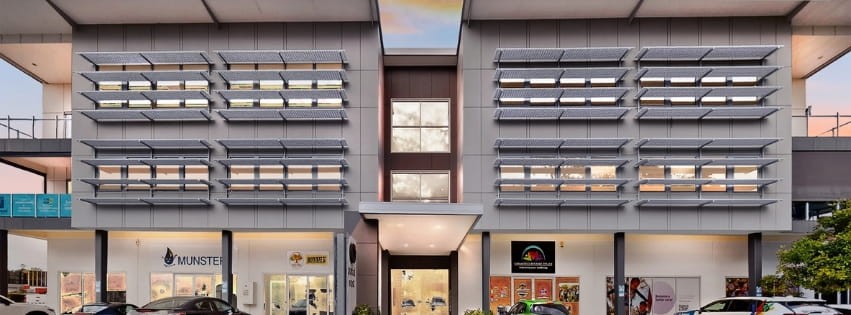
Underwood’s commercial environment typically rewards properties that are functional and easy to operate from. You’ll commonly see:
- Retail and convenience-style tenancies serving local and passing trade
- Service businesses that rely on accessible location and parking
- Industrial and trade-style uses that value practicality over polish
- Office and small commercial suites that need comfort and convenience
This mix is good news for owners because demand isn’t dependent on one single industry. The risk is that mixed demand can hide underperformance if your lease and operating systems are loose. A strong manager keeps you focused on what matters: tenant quality, defensible rent, clean outgoings and renewal timing that protects your negotiating position.
What Sophisticated Investors Look For In Underwood Assets
The buyers who pay well aren’t just buying a building. They’re buying confidence. And the buyers that pay below well know they can obtain gains right off the bat.
In Underwood, that usually means it already has:
- A clear lease file that reads cleanly (no ambiguity, no “we’ll sort it later”)
- A tenant profile that makes sense for the location and premises
- Documented outgoings processes (budgeting and reconciliation history)
- Evidence of maintenance planning (not just emergency invoices)
- Compliance records organised and current
- A renewal strategy that has been actively managed, not hoped for
If you want stronger valuations and smoother transactions later, management has to build that story now. The best time to make your property “sale-ready” is while you’re collecting rent, not when you’ve already decided to exit.
Buying and Selling in Underwood
When you buy or sell in Underwood, you’re not just trading a building, you’re trading income, risk profile and time. Our role is to structure campaigns that match the way this corridor actually works: mixed use, car-dependent and driven by operators who value access and practicality.
Sales campaigns in Underwood typically focus on:
- Defined buyer profiles – local owner-occupiers, private investors and syndicates who understand Logan and the M1 corridor.
- Sale-ready preparation – tightening leases, outgoings and documentation before going to market so buyers are paying for certainty, not discounting for risk.
- Targeted marketing – combining major commercial portals, direct database approaches and on-ground enquiry from our existing owner and tenant relationships in the Underwood-Logan-Brisbane corridor.
- Transparent information packs – clean IMs, lease summaries, outgoings history and compliance evidence so serious buyers can move quickly and confidently.
Leasing in Underwood
Leasing in Underwood is about tenant quality first, speed second. We manage that by:
- Channel mix, not one ad and hope – professional listing on the main commercial portals, direct contact with active tenants in our database, on-property signage and targeted digital where appropriate
- Screening for operational fit – assessing covenant strength, use, approvals and practical suitability for the site (access, parking, loading, neighbours) before terms are agreed
- Clear, commercial agreements – documenting more than just rent, incentives, works and make-good such as clear responsibility lines (who pays what, who maintains what)
- Structured handover – coordinating entry condition reports, compliance checks and communication so the tenant can start trading efficiently and you start the lease on the front foot
A quality tenant who renews is worth more than a fast tenant who leaves early. Leasing should be structured to attract long-term fit, not short-term urgency.
So whether you’re buying, selling or leasing in Underwood, the aim is the same: campaigns that protect your net income, shorten vacancy risk and leave you with a story that stands up to scrutiny when the next valuation, refinance or sale comes around.
Industrial Properties in Underwood: Access, yard use and compliance
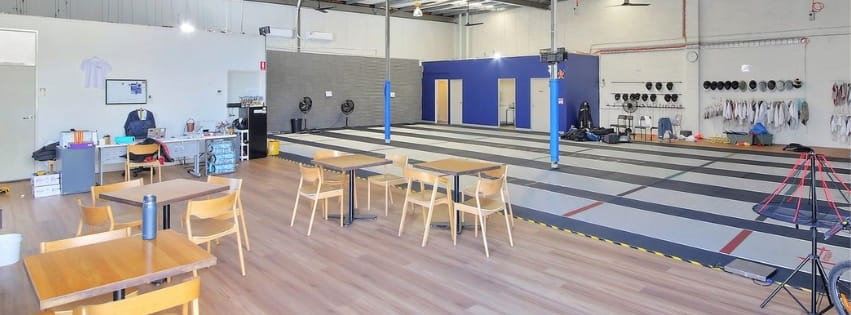
Industrial assets win in Underwood when they’re easy to use: access, turning circles, loading practicality and site rules that prevent headaches.
Great management in industrial focuses on:
- Clear site standards (parking, storage, waste, after hours access)
- Regular inspections with photo evidence and documented follow-up
- Contractor control and cost discipline
- Compliance scheduling and record keeping
- Lease clarity around repairs vs maintenance responsibilities
Industrial tenants value speed and practicality. Owners value predictability and asset protection.
Retail Properties and Assets in Underwood: Presentation, parking and outgoings clarity
Retail performance is sensitive to perception. Even a strong location can underperform if presentation slips or shared services are messy.
For retail-style assets, owners win when:
- Common areas are consistently maintained
- Signage, access and parking rules are clear and enforceable
- Maintenance is handled quickly and professionally (no lingering issues)
- Outgoings are transparent (budgeted, documented, reconciled cleanly)
- Tenant mix strategy is considered – not accidental
Retail tenants watch occupancy costs closely. When outgoings are unclear or poorly supported, disputes rise. Clean systems reduce friction and improve retention.
Office and Commercial Suites in Underwood: Comfort, clarity and retention
Office and suite-style tenancies are often renewed when the building feels predictable, comfortable, responsive and professionally run.
Strong management typically prioritises:
- Reliable HVAC and lighting comfort
- Fast response to maintenance requests
- Clear building rules and access procedures
- Clean presentation that protects perceived value
- Calm, documented communication that avoids misunderstandings
These aren’t “nice-to-haves.” They directly affect retention. Retention affects vacancy. Vacancy affects net returns. It’s a straight line.
Property and Asset Management in Underwood
Lease Administration and Tenant Management: Where Certainty Comes From
Smart property management in Underwood focuses on tight, predictable lease administration, including:
- Review clauses actioned early and backed by evidence – market data, lease history and clear communication so increases are defensible, not debated
- Options and notice periods managed precisely – no missed dates, no “surprise” holdovers and renewal conversations started on your terms, not the tenant’s
- Security held at the right level and monitored – bank guarantees or bonds that match the risk, tracked and updated as rent changes
- Make-good obligations defined and enforced – agreed up front, documented clearly and managed well before lease expiry
- Calm, professional communication – firm but fair enforcement of lease terms that reduces emotion and keeps everything on the record.
Owners don’t need drama, they need certainty. Certainty comes from tight lease administration that removes grey-area arguments before they start and keeps the timeline on your side.
Outgoings: Where owners commonly lose money
In standard form agreements, outgoings pain often comes from one simple thing: the paperwork looks complete at a glance but the outgoings section underneath isn’t properly completed.
That’s how owners end up with:
- Costs assumed recoverable but later disputed
- Annual reconciliations that turn into tenant friction
- “Net” income that isn’t as net as expected
- A messy file that becomes a buyer objection later
Good lease structure and good management make outgoings boring (but in the best way); clear budget, transparent communication, correct categorisation and a reconciliation process supported by evidence.
When outgoings are handled properly, tenants are far less likely to argue and owners enjoy a more stable, defensible net result – which is exactly what valuers and buyers look for in an Underwood asset.
Local Expertise: Why Underwood Knowledge Affects Outcomes
Local expertise isn’t about saying “we know the area.” It’s about making faster, smarter calls that protect you and your income.
- Knowing what tenant types are actively looking in the area
- Knowing typical incentive expectations (and when to resist them)
- Understanding what presentation standards attract better tenants
- Recognising early warning signs before they become vacancies
- Having contractor and service relationships that improve response time and cost control
Many of our Underwood owners also hold assets in nearby suburbs like Springwood, Slacks Creek, Rochedale, Kuraby and Eight Mile Plains.
When you combine local market awareness with tight systems, you as the owner get fewer surprises and stronger results.
What owners get when their asset is managed like an investment
When management is proactive and disciplined, owners typically experience:
- Cleaner cash flow and fewer arrears surprises
- Earlier renewals and less vacancy shock
- Reduced disputes over outgoings and responsibilities (reducing the risk of legal fees)
- More predictable maintenance spend
- Stronger documentation for refinancing or sale
- Confidence that the asset is being protected – not just “kept going”
That’s the real value: less uncertainty, stronger net returns and a property that behaves like the investment you intended.
Your Next Steps: A practical performance review of your Underwood asset before or after sale
If you want a clearer plan and tighter outcomes, the best first step is a management performance review that looks at:
- Lease dates and review triggers
- Rent positioning and renewal strategy
- Outgoings structure and recoverability process
- Maintenance and compliance plan
- Reporting clarity and decision cadence
From there, you get a clear roadmap: quick wins now and strategic moves over the next 6-12 months.
Speak with RWC CSR about a performance review for your Underwood asset – before or after sale – and turn the fundamentals of this corridor location into real, measurable outcomes.
Book a Property Performance Review

Prepared by Annabelle Weir, Head of Commercial Property Management, Ray White Commercial CSR
Last Updated: January 2026